

Last week, a UPS MD-11 crashed at Louisville’s Muhammad Ali International Airport, Kentucky, USA, shortly after takeoff. The jet, carrying an estimated 38,000 gallons (144,000 litres) of fuel, erupted into a massive fireball as it crashed into an industrial area about two kilometres from the airport, striking multiple buildings and causing extensive damage. The cause is believed to be a catastrophic engine separation. The accident, shockingly killed at least 12 people and injured nearly 20 more. My deepest condolences to all affected.
Social media feeds exploded with concern about air travel safety. In 2025, many people have expressed worry about the “high number” of accidents. Some people have reached out to me personally to see if I am afraid of flying. I am not.
By June 2025 there had been 24 major airline accidents worldwide, 7 of them fatal, resulting in 385 deaths. —tragic, but minuscule compared to about 20 million global commercial flights operated so far this year. Airline safety remains at historic highs, with a fatal accident risk of 0.11 per million flights, or about one fatal crash per 9–10 million flights.
In 1968, when I first started flying (as a baby), the fatal accident rate was about 5.2 per million flights. That year, there were around 80 fatal commercial jet accidents and over 2,400 deaths worldwide. You will note that is far higher than today whilst far fewer people flew.
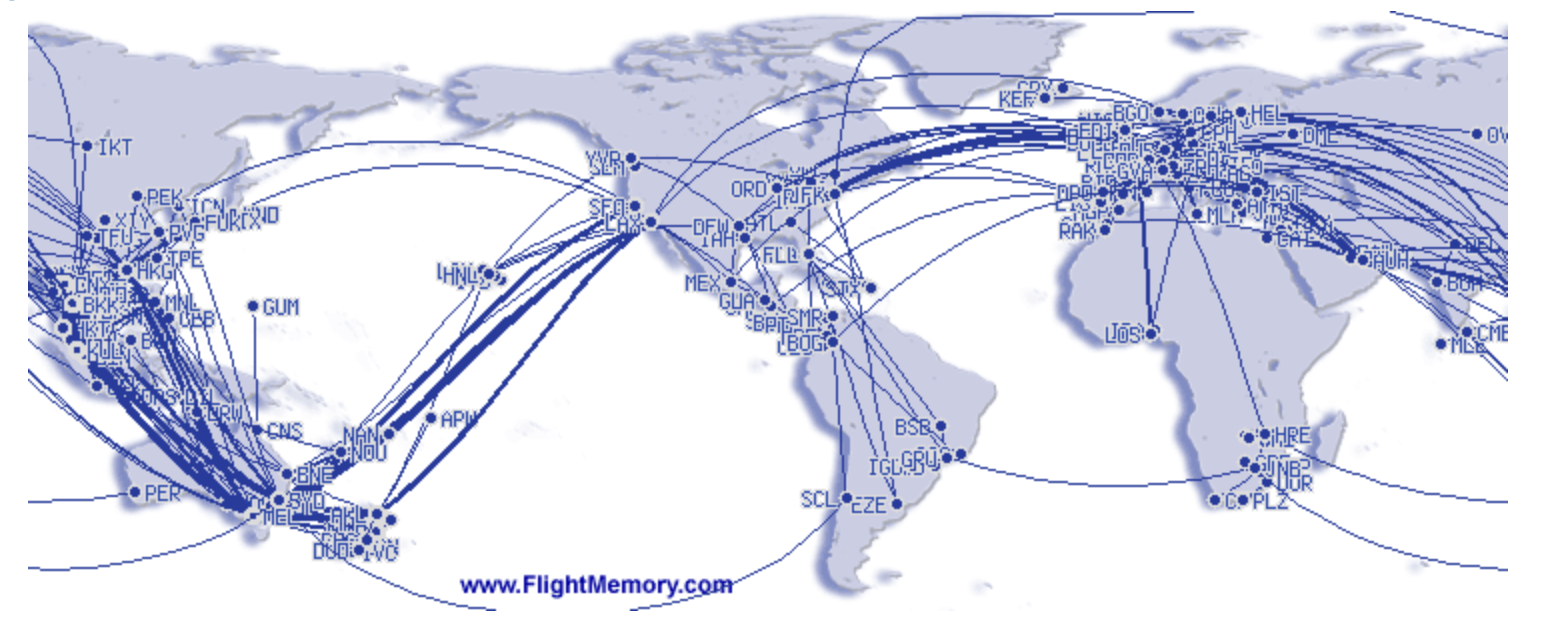
The good news is we learnt from this high accident rate. Each accident resulted in significant air safety changes. For example, the deadliest crash in aviation history occurred when two Boeing 747s, a KLM taking off and a Pan Am 747 taxiing, were caught in confusion, miscommunication, and poor visibility at Tenerife Airport. They collided in thick fog on the runway in 1977, killing 583 people.
This single tragedy led to multiple global reforms, including standardised phraseology in radio communication and the introduction of Crew Resource Management (CRM) training for pilots, which empowered crew members and enforced teamwork and clear communication. It also brought stricter runway guidance and air traffic control requirements for low visibility or congestion.
Lessons from this and other incidents, plus better plane technology, meant that by 1980, the fatal accident rate for commercial airline flights worldwide was half of what it was just 12 years before, at approximately 2.5 fatal accidents per million flights.
In the 1980s, the industry learned from American Airlines Flight 191 (engine separation, 273 dead), Japan Airlines Flight 123 (structural failure, 520 dead), Delta Flight 191 (wind shear, 137 dead), and British Airtours Flight 28M (cabin fire, 55 dead), leading to tougher maintenance regulations, improved structural inspections, wind shear detection, and fire-resistant cabin standards and evacuation processes.
By 1990, the fatal accident rate had dropped to below one per million flights.
Commercial aviation technology advances include the shift from aluminium to lightweight yet ultra-strong composite materials (such as carbon-fibre-reinforced polymers) for better structural strength. The introduction of digital fly-by-wire controls rhas educed human error. Computerised monitoring systems that constantly check and back up all critical functions, plus improved weather radar and navigation, as well as global enhancements in both pilot training and maintenance standards, mean modern airliners (the 737 MAX notwithstanding) achieve extraordinary safety records. And we have even learnt, improved and fixed the MAX.
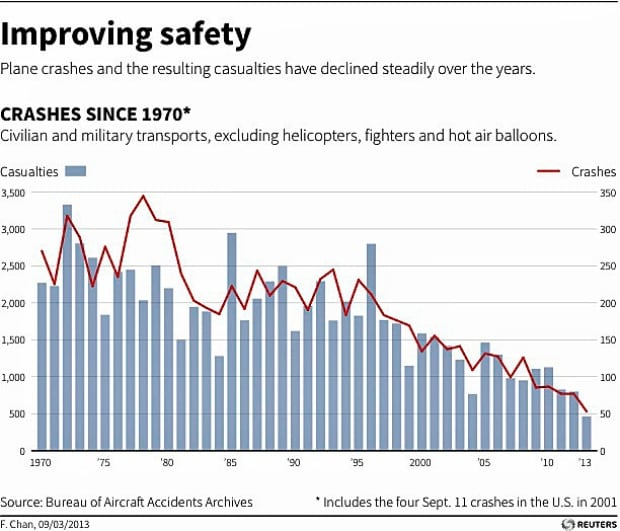
The result of safety lessons and new technology means that today, air travel is statistically about 50 times safer than in 1968 and at least three times safer than in the 1990s. If fatal accident rates hadn’t dropped since the 1960s, 2025 would see roughly 170 fatal air crashes and potentially 20,000 to 30,000 annual fatalities. Instead, every major accident brought lasting safety changes, and we now fly in the safest era in aviation history.
This is why I am both grateful for modern air travel and not worried.

Leave a Reply