


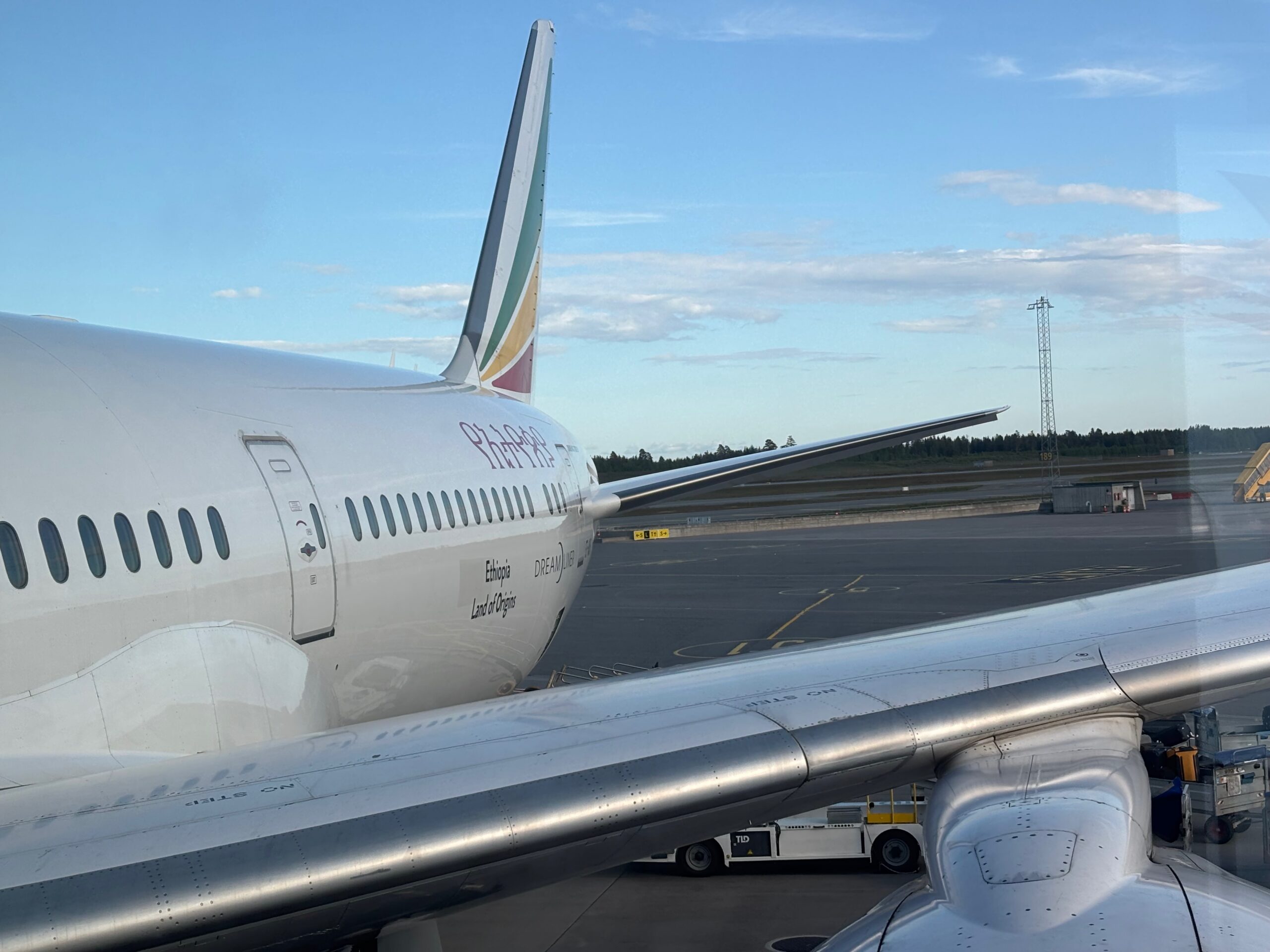
As a frequent flier, I hold status in three programs: Virgin Australia, Qantas (oneworld), and Turkish (Star Alliance), and I juggle credits across all of them. I need to know, actually, how many miles I am getting or not getting when I am booking flight choices. For example, last year I flew Ethiopian Airlines in business class and discovered (after the flight) that Turkish Airlines didn’t award any miles because I had chosen the wrong Fare Class. Even though I had paid for Business Class! Normally, I am more vigilant, but this one slipped through. And it wasn’t even a very good flight experience!

For many years, a website called Where to Credit has been my main source for figuring all this out. It had become a bit tired and dated, but it has recently undergone a major upgrade and is now excellent. I am very grateful for the changes.
When I am looking at a ticket, there are two things that are important. The first is the Cabin (or class of service), and the second is the Fare/booking class, a one-letter code (Y, J, K, etc.) that controls ticket pricing, rules, and miles.
Cabin
Full-service airlines have up to four cabins, from cheapest to most expensive:
- Economy or Coach: Standard seats, tightest legroom, basic food and luggage options
- Premium economy: This varies dramatically across carriers. Emirates, EVA Air and Japan Airlines have genuinely larger seats, much more legroom and clearly separated quiet cabins with upgraded meals and service, while China Southern’s 777 and Austrian’s 767 premium economy have weaker catering and fewer amenities.
- Business: Much larger seats, usually lie-flat on long-haul, lounge access, priority check-in/boarding, better food and drinks.
- First: Fewer and fewer carriers have First. When they do, the top product offered with private suites or very large seats, the best food and drink, and the highest service level. On US domestic flights, what is called ‘First’ is often equivalent to business class (and sometimes only premium economy) on many Asian, Pacific, or European airlines.

A few years ago, I usually got one mile for every mile flown in Economy /Coach and earned more in the higher classes. Now, more and more programmes use zone-based or revenue-based earning systems and give varying quantities of points. Sometimes, buying a business-class ticket means earning fewer points than on some Economy fares! Enter Fare Classes…
Fare Classes
Every ticket also has a booking code (fare class), usually shown as a single letter, that indicates price level, flexibility, mileage earning, and upgrade rules. These are examples of common patterns across many airlines, but note they are not identical or universal
- First: F, A (full-fare and discounted first).
- Business: J, C, D, I, Z, R (J/C usually full-fare, D/I/Z/R discounted).
- Premium economy: W, P, sometimes T, E, or O.
- Economy full or flexible: Y, B, M, H on many carriers.
- Discount economy: K, L, Q, V, T, S, N, O, G, etc., usually cheaper with more restrictions.
Each airline defines its own rules for each letter (change fees, refundability, upgrade priority, mileage percentage, etc.), but each letter still maps to one of the cabins above. A rough rule is to think: Cabin is Seat Comfort, Code is Conditions. Airlines now give very different point counts for the same booking class with different programmes.

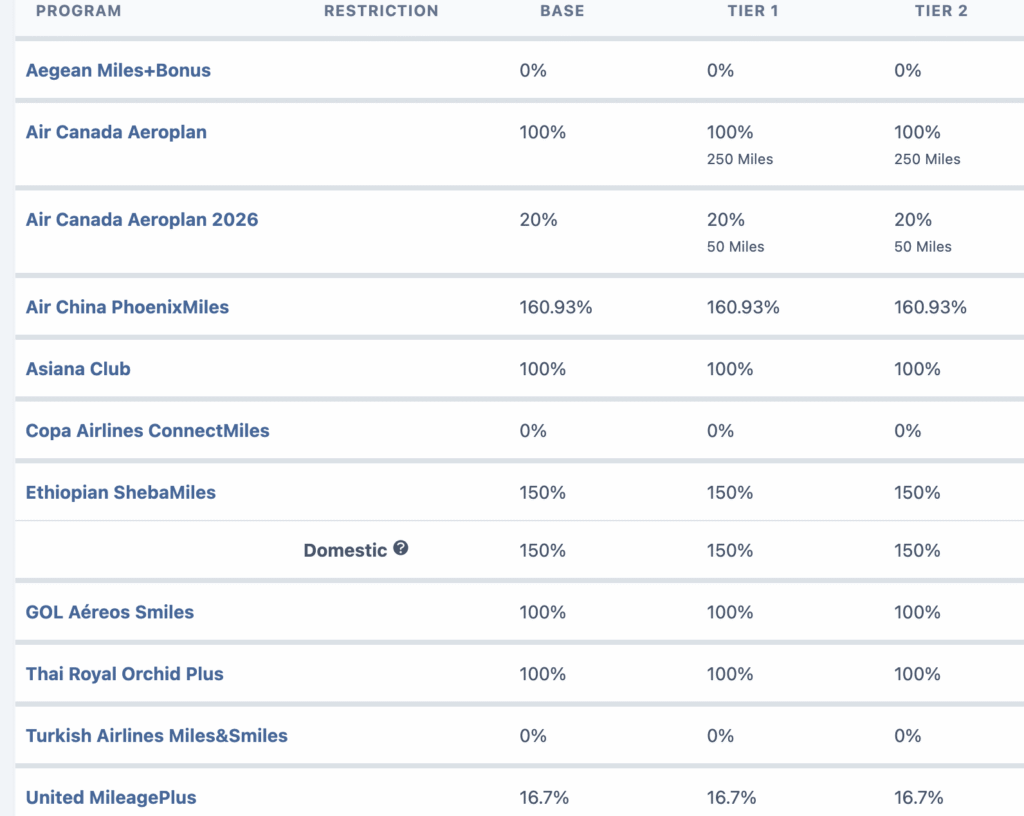
Back to that Ethiopian flight: Turkish awarded me zero points for my P-class business-cabin booking. Ethiopian would have given me 150% if I had credited the flight to them. Aegean and Copa would also give no points, while Air Canada says 20%, Asiana and Thai 100%, and Air China 160%. This image from Where to Credit shows the range.
So, how do I figure out what all this means for my miles? That’s where Where to Credit comes in. It currently covers dozens of frequent flyer programmes (over 50 at the time of writing). It lets users compare programs side by side when booking classes, with separate tables for award miles and status miles. This is a key improvement over the old site. The site now shows status bonuses for elite members. It even handles special cases, such as regional earnings differences. There is a handy mileage calculator that lets me enter a full itinerary and compare earnings across dozens of programmes in one go.
The site has been around for a long time. In November 2025, the team behind Travel‑Dealz, a European‑based mileage-and-travel-hacking blog that operates miles.travel‑dealz.com, took over and upgraded it.
A major frustration for me is that many airlines and booking sites hide the booking class, both during booking and after your ticket is issued. Fare class should be displayed as standard. This lack of transparency is not just an abstract annoyance. That one code can determine whether you earn thousands of miles or end up with zero credit on a flight, as I experienced with Ethiopian/Turkish. If you want to find yours, check your booking confirmation email or e-ticket receipt. A single letter should be next to each flight segment, labelled ‘class‘ or ‘booking class.’ Some online check-in screens also display it.
To keep my elite status, I normally credit my flights to my main frequent flyer programme. But if that partner airline offers significantly fewer miles, I’ll credit that flight to an account I keep solely for award bookings.

If you understand your fare class and Where to Credit, you’re no longer guessing or missing out on points. You are in control of your miles, your status, and your future trips. Essential for a frequent flier. Useful for an occasional flier.
Related Posts
- Very Frequent Flying: My best and worst of 2025
- Are You Really Choosing Your Airline? Three Groups Control Our World.
- Grounded for Good: The Airlines That Didn’t Survive 2025
- After 300 Airports, Here Are the Best and Worst

Leave a Reply