

I just spent two amazing weeks in Finland, which remains one of my favourite countries in the world. This trip: Helsinki, Rovaniemi, and Turku. I’m still processing everything I experienced. The timber architecture of Rovaniemi, the frozen Baltic where ships should be, and now this: my Moomin pilgrimage across 80 years of Finnish magic.

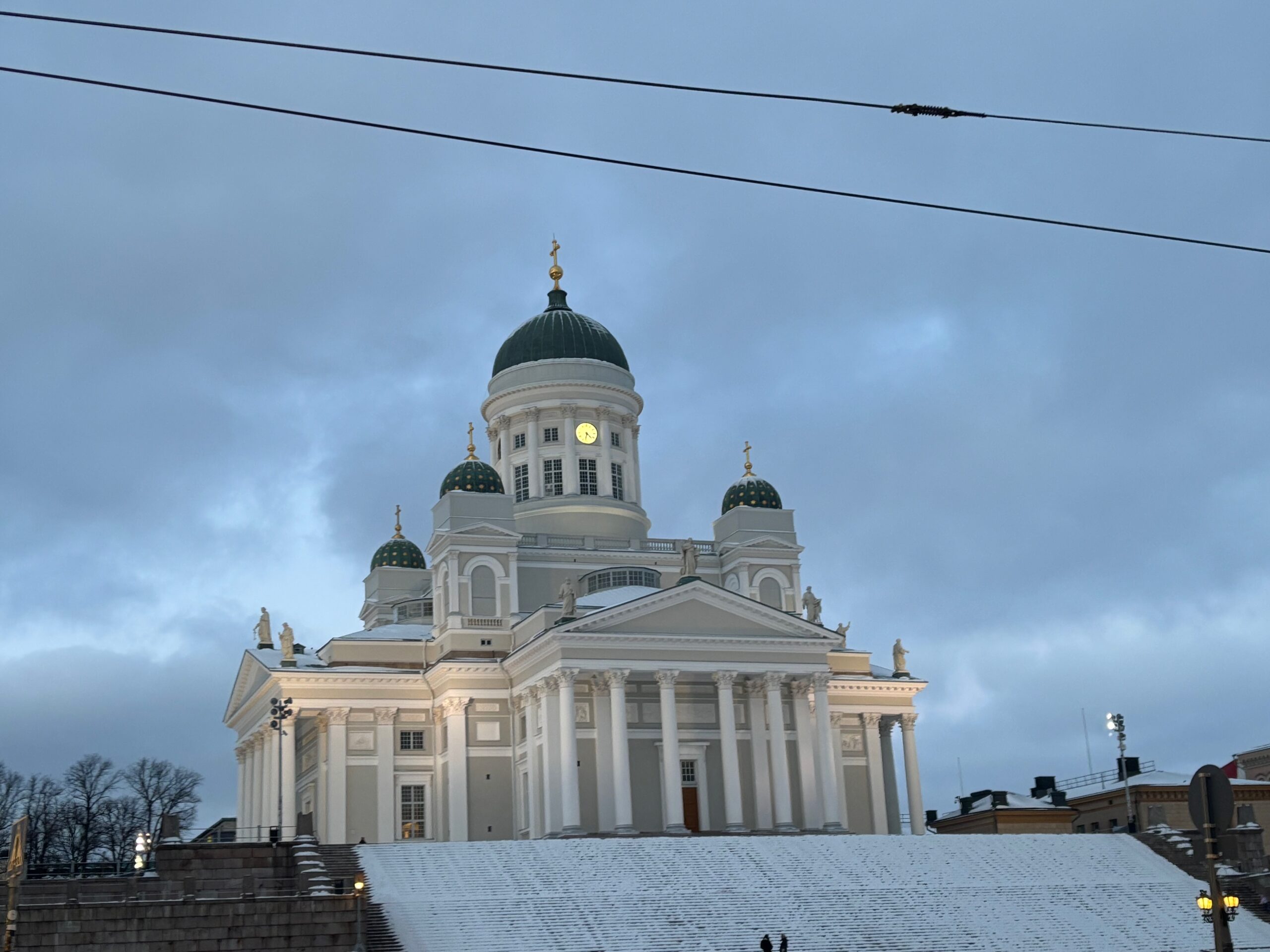
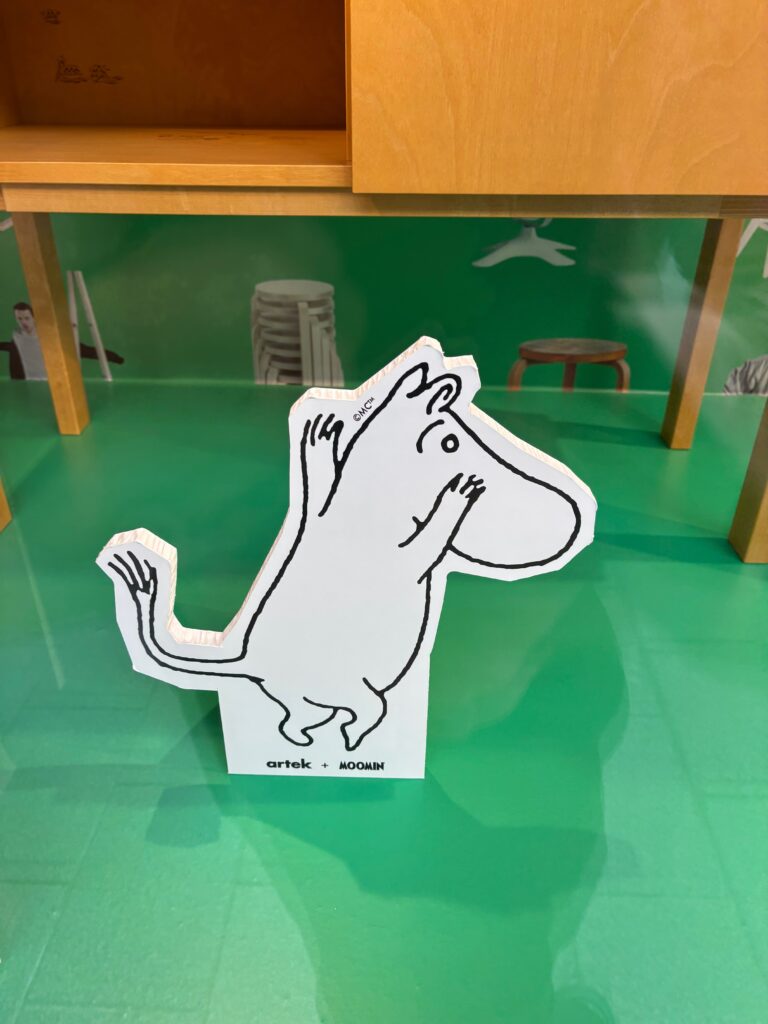
All my friends know I’m a huge Moomin fan.
The Moomins are a family of warm‑hearted troll‑like creatures created by Finnish artist and writer Tove Jansson (1914–2001). Across novels, picture books, comics and murals, she uses Moominvalley to explore friendship, freedom and the right to be yourself. I’ve read almost every book Jansson wrote, and my trips to Finland always give me more chances to follow the trail properly across multiple cities and exhibitions.
2025 marks the 80th anniversary of the Moomins. They have become one of Finland’s most recognisable cultural exports, and Helsinki has been celebrating.
Here’s what most people don’t know: Moomins aren’t just kids’ books. Created in the darkness of the Second World War, these stories grapple with adult themes: solitude, freedom, hospitality, fear, adventure, and grief. Moominvalley is a place where visitors of every kind are welcomed, even when they are prickly, lonely or strange. Disasters arrive, including comets, floods and long winters. The characters face them together, with humour and stubborn hope. Jansson never talks down to children, folding in melancholy, doubt and adult questions alongside play. That mix of cosiness and existential unease is why the Moomins speak as strongly to adults as to children. Reading them as a child is one experience. Returning to them as an adult, you realise Jansson was writing about the human condition, disguised as gentle trolls in a Finnish valley.
My Favourite: Snufkin the Wanderer
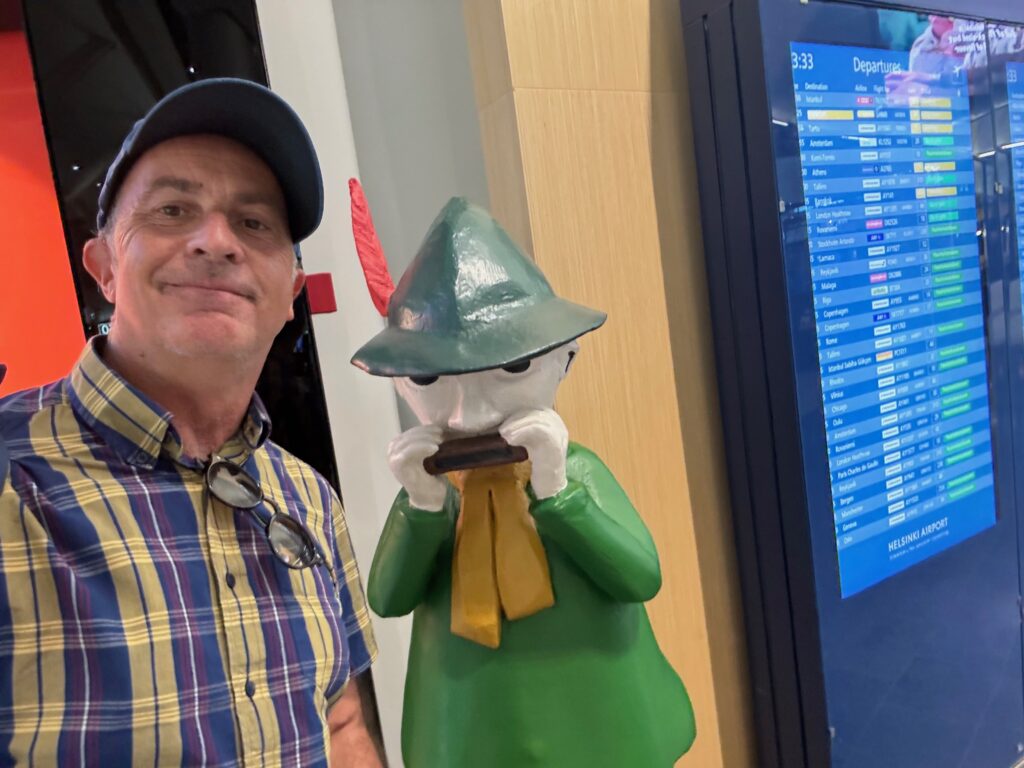
Snufkin (Swedish: Snusmumrik, Finnish: Nuuskamuikkunen) is my character of choice (followed by Little My). He appears in six of the nine books, starting with Comet in Moominland (the second book). Snufkin is Moomintroll’s best friend, but he explores the world alone. He always returns home, though. The inhabitants of Moominvalley see him as very wise, and in times of conflict, they turn to him for help and follow his advice.
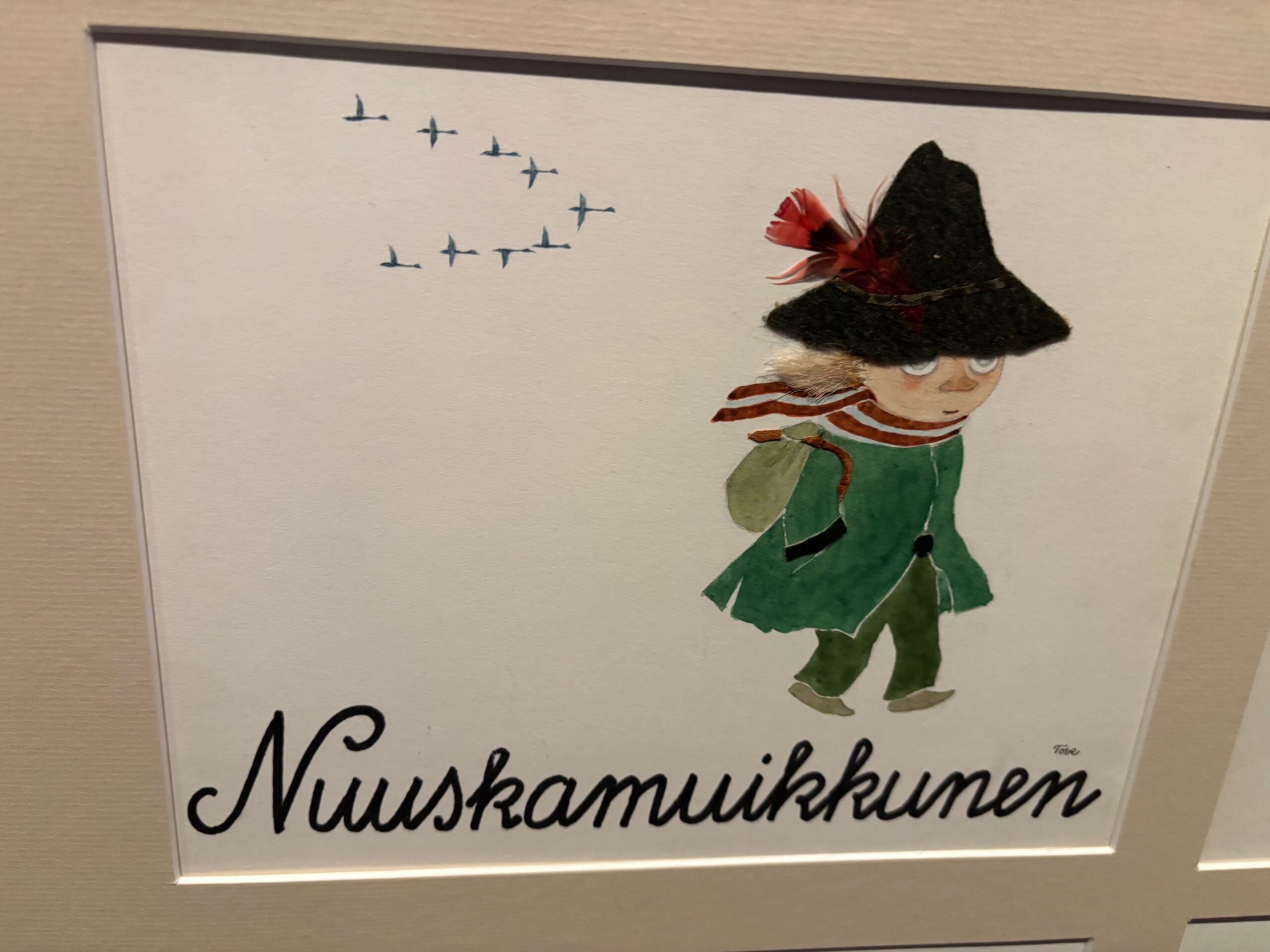
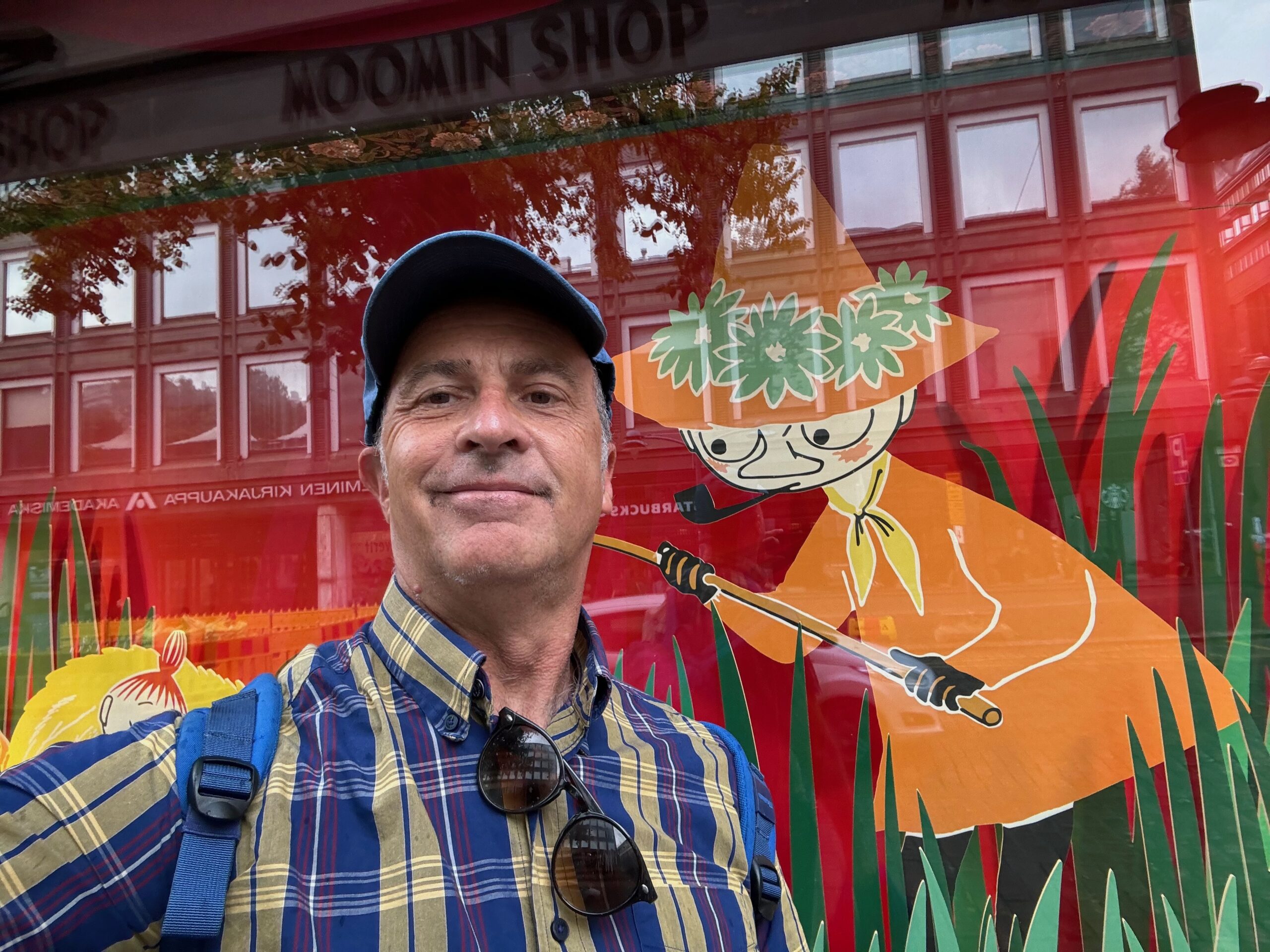
As someone who maintains status across multiple airline programs and splits time across continents, I see myself in Snufkin. The wanderer who always comes back. The person people see as having figured something out, when really you’re just comfortable being uncomfortable.
Tove Jansson based Snufkin on her one-time fiancé, Finnish MP Atos Wirtanen. His devotion to politics contributed to the failure of their relationship. In 1956, Jansson met her lifelong partner, Tuulikki Pietilä, known as “Tooti,” who inspired the character Too-Ticky. They were together until Jansson’s death in 2001.
One of the beauties of the Moomins is that you can find yourself in at least one character. Timid treasurer collector? Bureaucratic rule keeper? Rule breaker? Practical? Nurturing homebody? Reluctant or eager adventurer? You will find yourself in Tove’s pages!
HAM Helsinki Art Museum
HAM housed 180 works by Jansson from 25 October 2024 to 6 April 2025, which I saw last year. HAM’s own material and partner sites described it as a “monumental show” featuring her public murals, large charcoal studies, and sketches tracing the evolution of her characters.
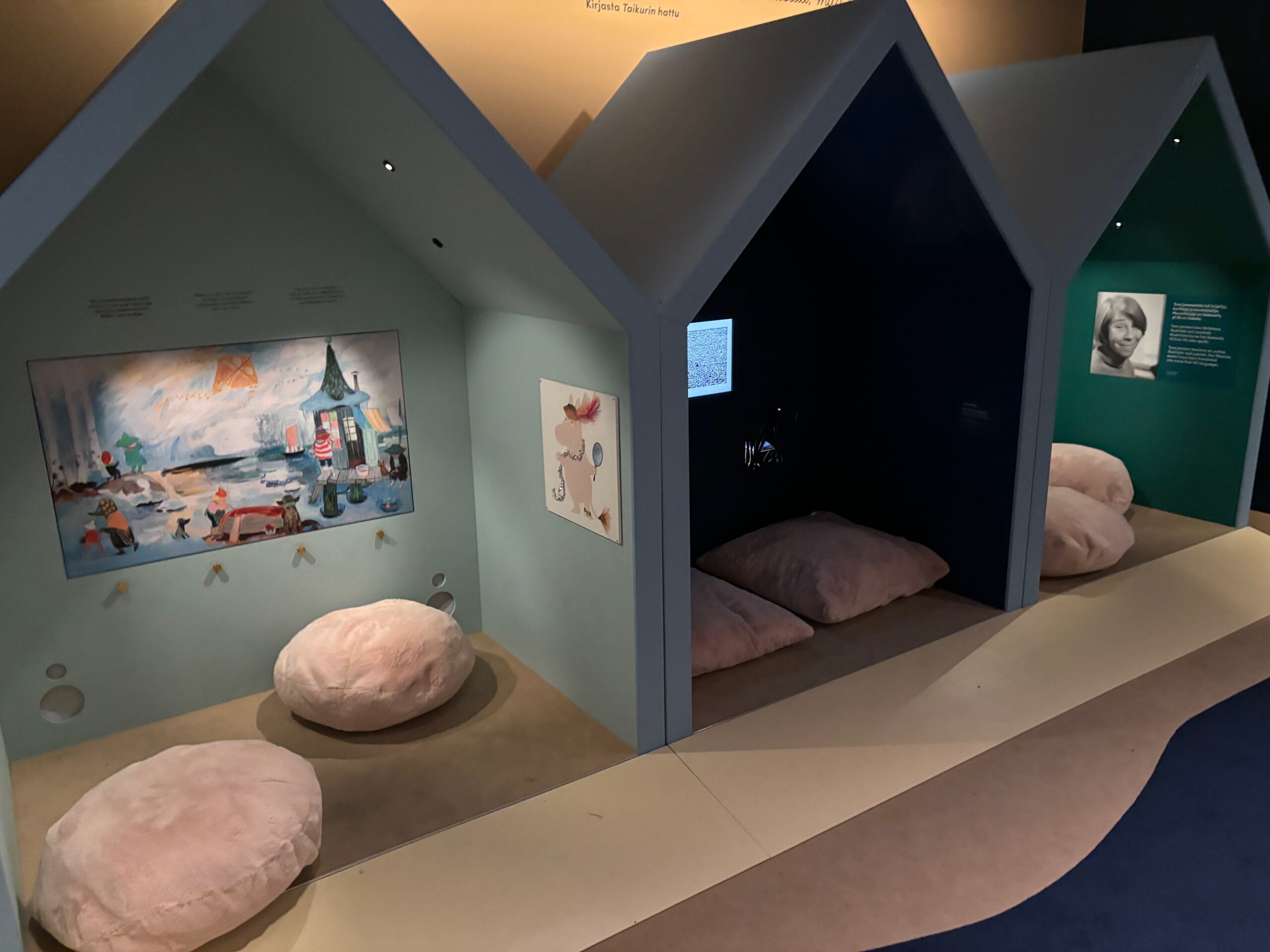
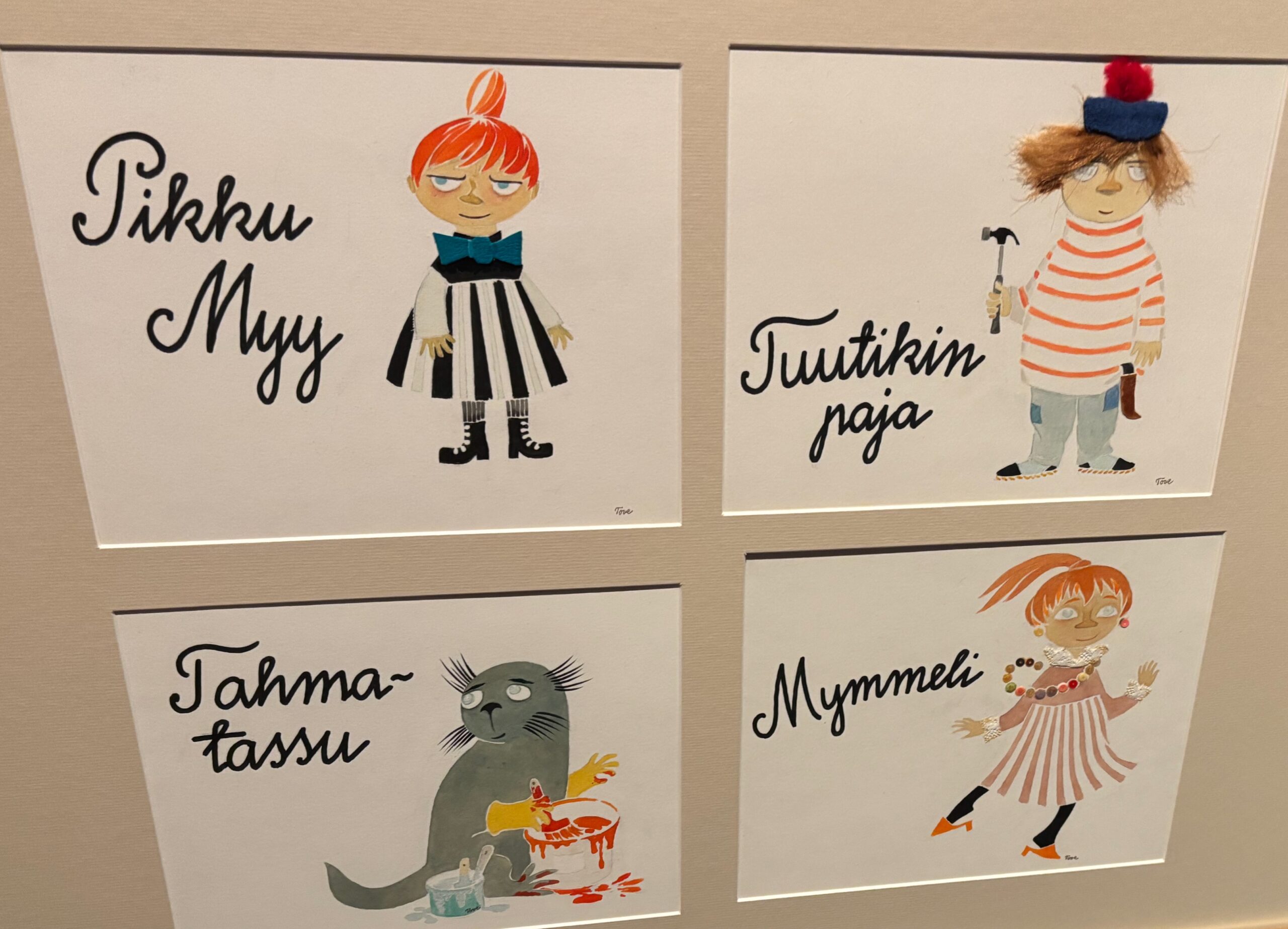
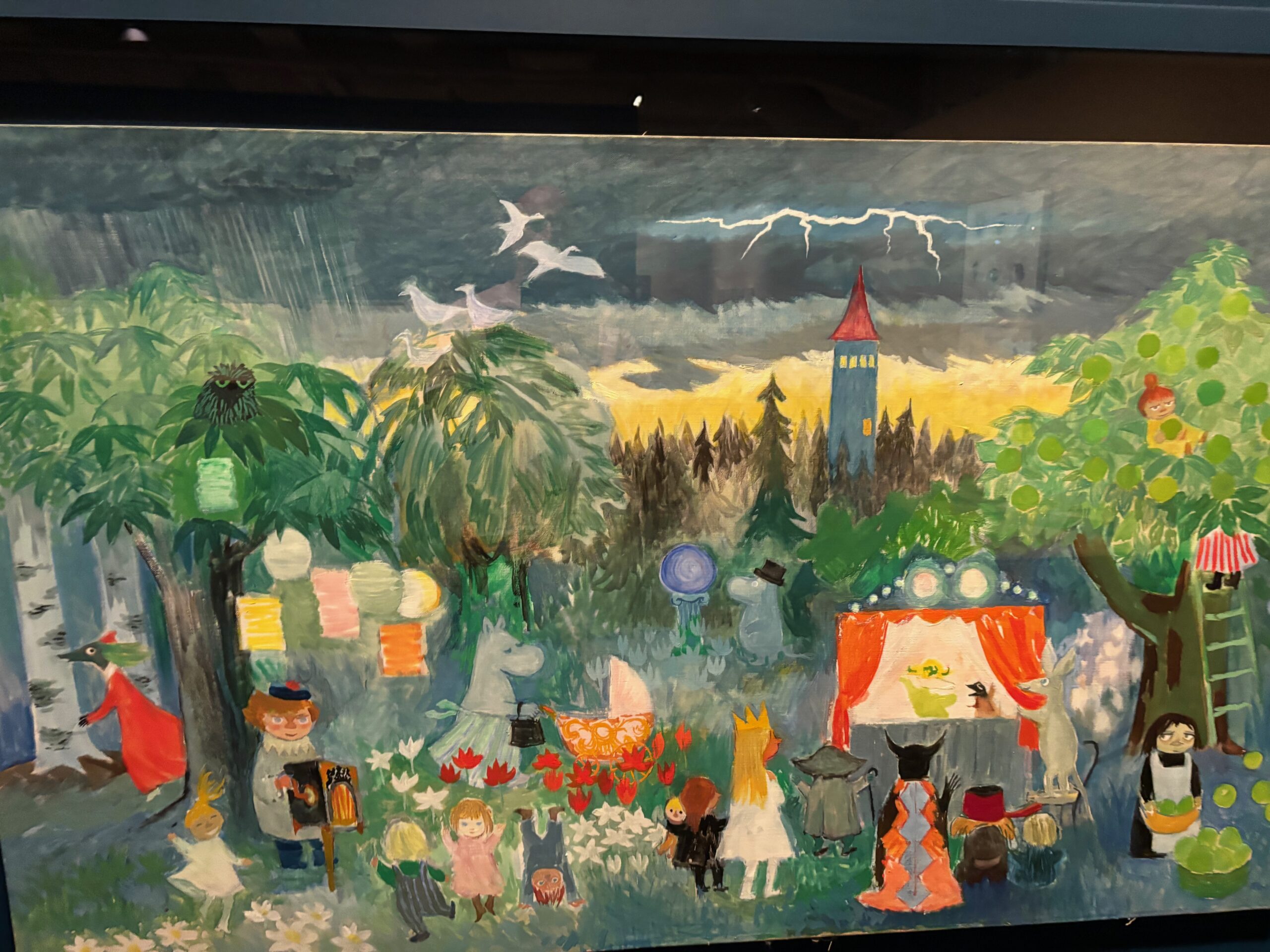
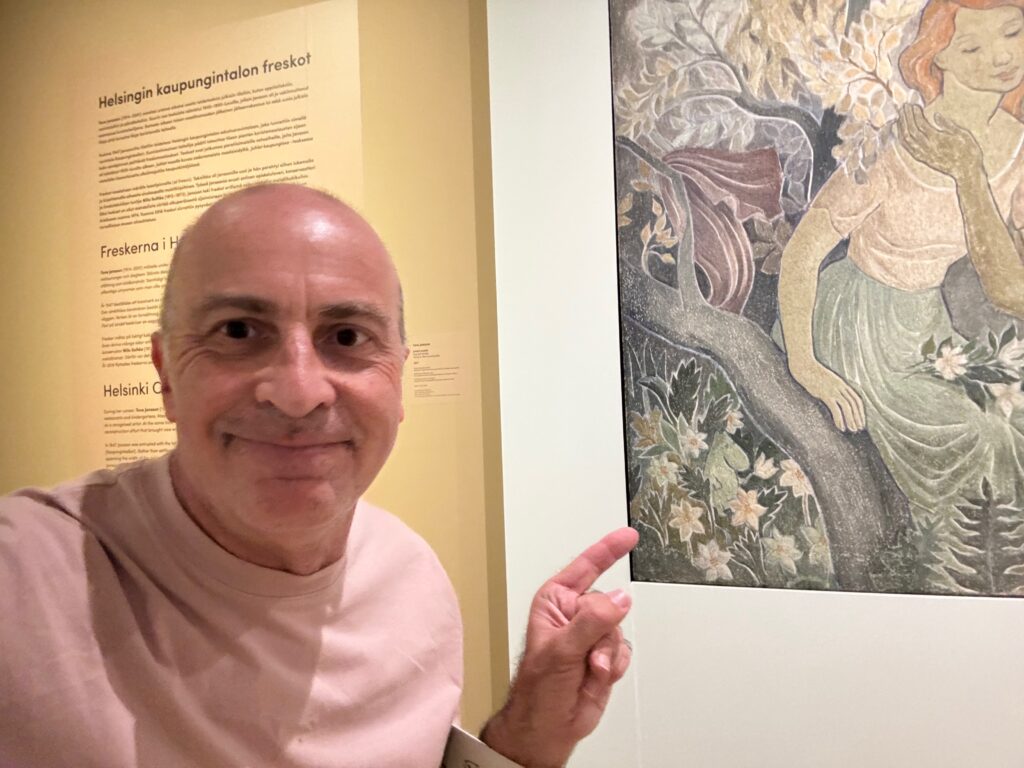
This is me pointing at the very first publicly seen Moomin, drawn long before the books became global phenomena.
Standing there, I felt as if I were witnessing the birth of something that would shape childhoods (and adulthoods) across generations.
Architecture & Design Museum
Last week, I visited this museum’s “Escape to Moominvalley” exhibition, which runs until September 2026. If you’re in Helsinki before then, it’s essential. The exhibition doesn’t just display Jansson’s art — it immerses you in her creative process, showing how she built an entire world from imagination and wartime anxiety.
Moomin Shops
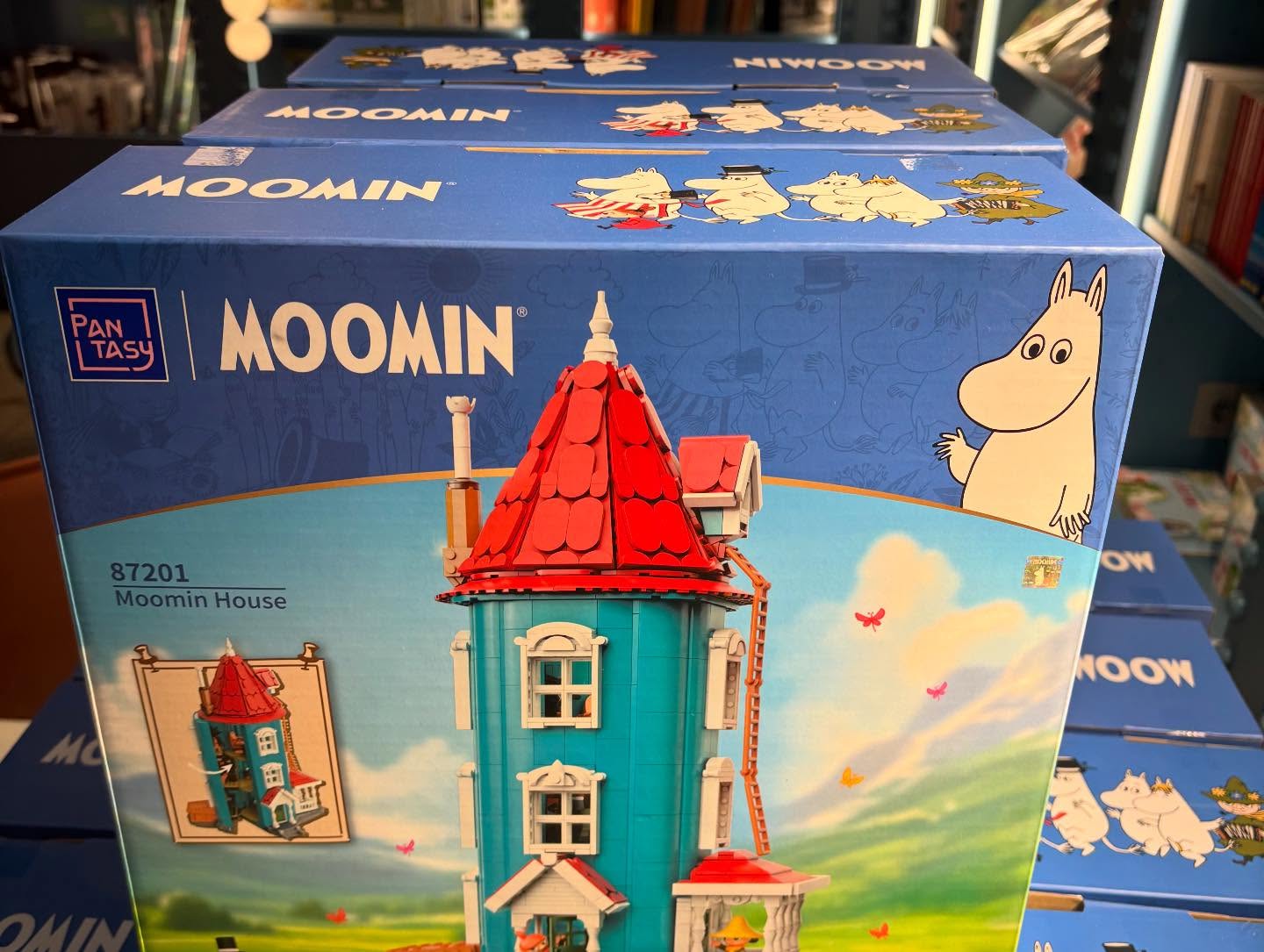
I always visit the Moomin shops in downtown Helsinki and at the airport. This time, I made it to the one in Rovaniemi, too. It’s become a ritual. Each time I find something new, or just stand there appreciating that Finland has turned its most beloved literary creation into a cottage industry without diminishing the magic. I have now discovered there is one in the check-in area at Hong Kong International Airport.


Finding Tove in Ullanlinna Street
One of the sites I’ve made a pilgrimage to twice is her long-time studio-home at Ullanlinnankatu 1. It has a tower-like top-floor corner apartment with high-arched windows and views over central Helsinki, where she lived and worked.
There was an attic connecting passage between her studio and the separate flat of her partner, giving them semi-separate lives but a private link at a time when same-sex relationships were stigmatised.
The building façade bears a memorial plaque with a bronze relief of a young Tove, created by her father, which visitors rub for luck.
The Architecture & Design Museum exhibition has a section dedicated to the home, including photos, a recreation of parts of it, and some of her furniture, letters, and artifacts.
Tove Jansson Park
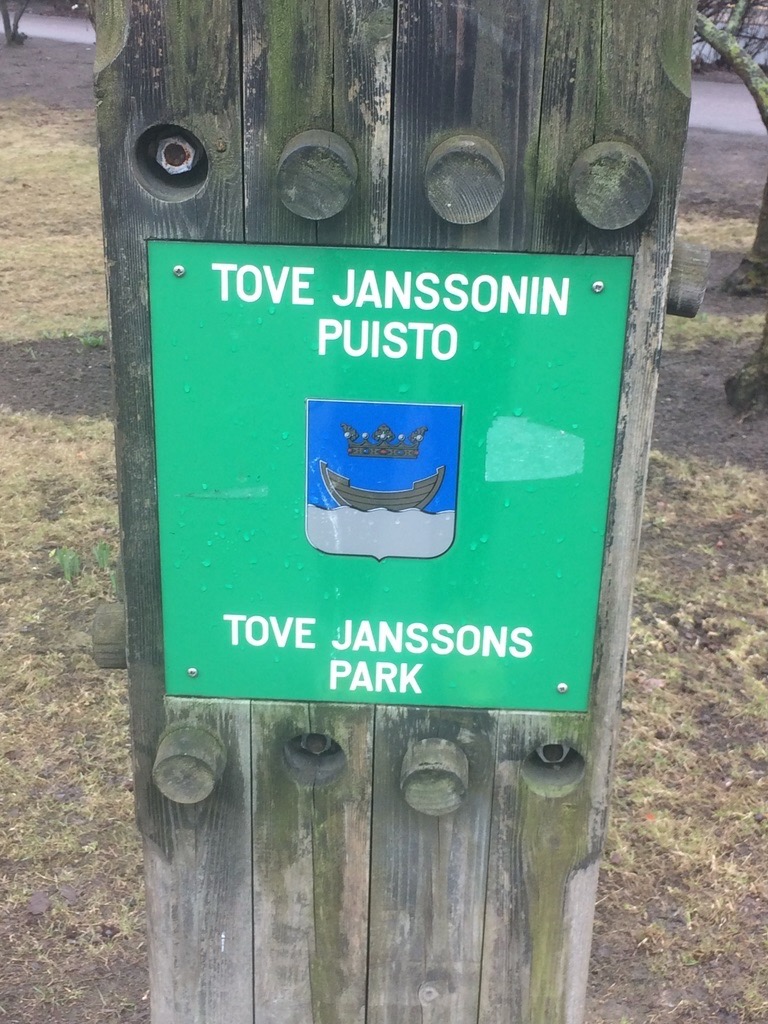
I noticed on this visit that the park near Uspenski Cathedral (with its magnificent golden cupolas) is closed for significant renovation. Katajanokka Park (1897) was renamed Tove Jansson Park in 2014, and I have visited it twice, only to be disappointed both times! Now it’s getting a real upgrade. They’re installing a life-sized, huggable Moomin statue, a playground area with the theme “Mystical Sea Adventure” (which draws on Jansson’s strong connection to the sea), and six Moomin-themed images on the fence. The design has been developed in collaboration with Jansson’s family and the company that manages her estate. I’m very excited to see it when I go back in June.
A Next Chapter: Moominvalley
I’m also hoping to finally get to Moominworld, the theme park in Naantali, near Turku, in the spring. It’s been on my list for years, but it’s only open for a few short months every year.

Love this Martin. Have you read The Summer Book? I enjoyed this so much. I love Tove’s work