

On 1 March, I shared a post called “Flying via the Middle East right now.” At that time, we were dealing with sudden airspace closures, missile threats, flight suspensions, and travelers stuck in airport terminals. Since then, things have only become more complicated and difficult as the conflict has worsened.
Do Not Travel to or through the Gulf
Most countries have issued warnings or advisories against travelling to the Gulf region. For some, such as the USA, the advice is to leave. For others, such as Australia, the advice is to avoid travelling to or through the Gulf states altogether. For others, including Switzerland, the advice is to avoid non-essential travel. Other countries fall somewhere in between on the travel advisory scale.
Ignoring it not only increases your personal risk but can also void your insurance coverage. It may also mean you cannot get consular support. Embassies have evacuated many or all of their staff from the region.
Here’s the current situation for each airport and airline.
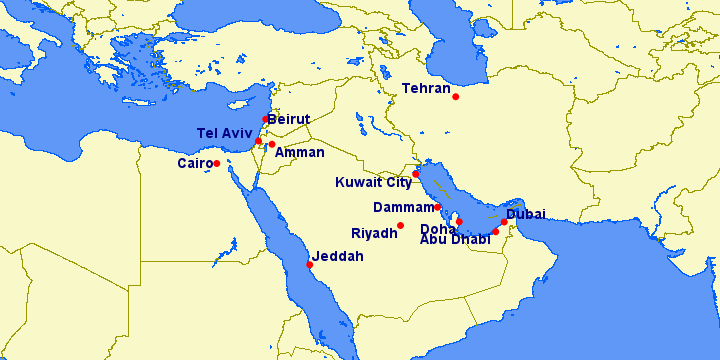
Airports to avoid completely (including for transit)
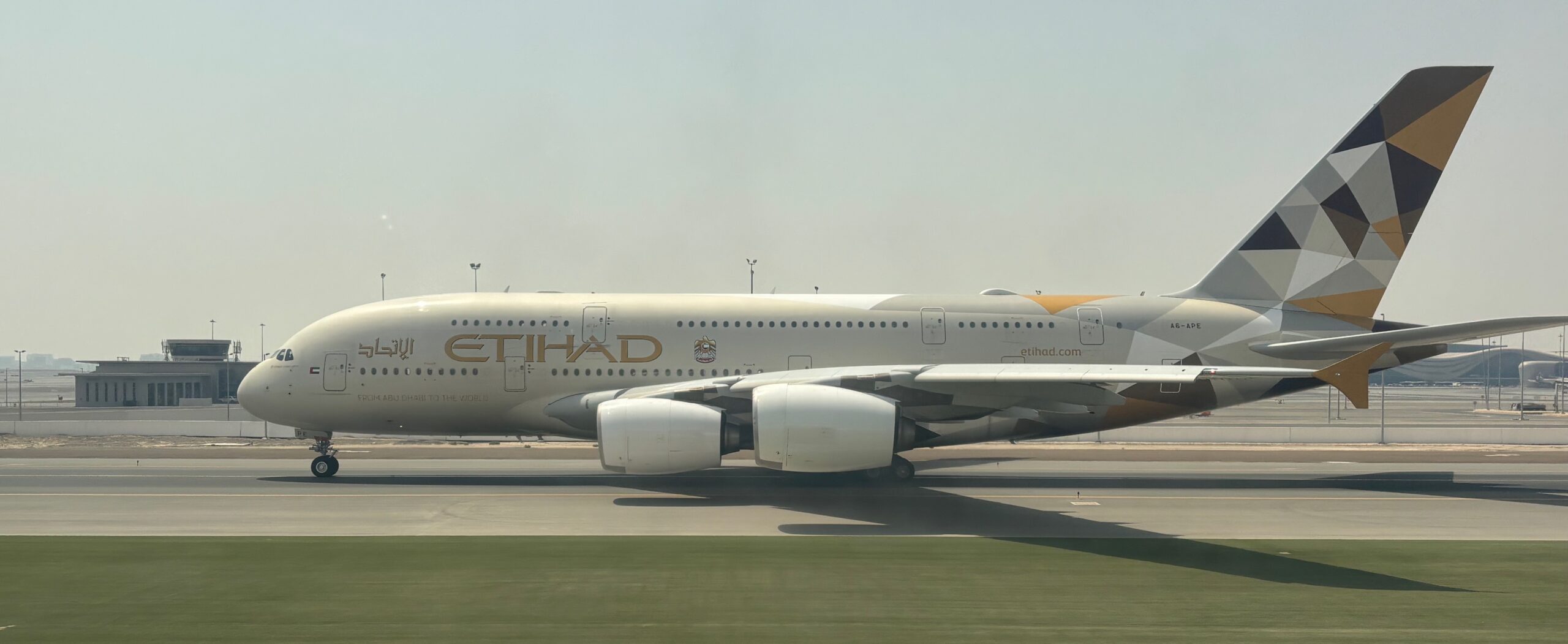
Abu Dhabi (AUH), UAE: Etihad. Zayed International Airport has been targeted by Iranian drones and missiles. There was at least one deadly incident from debris near the airport. Etihad stopped all departures for a while and diverted or turned back planes already flying. Flights have now restarted, but with fewer routes and less capacity. The main focus is on evacuation and essential travel.
Bahrain (BAH): Gulf Air has been hit hard. Authorities confirmed at least one strike on the airport, leading to safety shutdowns. Gulf Air moved much of its operation to a temporary hub in Dammam, Saudi Arabia, about 85 kilometers away via the King Fahd Causeway. Only a limited number of flights are running from there.
Beirut (BEY), Lebanon: Middle East Airlines. The Airport is still open, but Lebanon now carries firm “do not travel” warnings from many governments. The road to the airport has been intermittently blocked by displacement and unrest. Flights are operating on a fragile, disruption‑prone schedule, with waves of cancellations and delays.
Dubai (DXB), UAE: Emirates and flydubai. Threatening one of the world’s busiest airports and the main hub for Emirates causes serious economic and psychological disruption. Missile and drone attacks on the UAE have repeatedly disrupted operations. There have been fires and falling debris in and around the airport, leading to temporary runway closures, evacuations, and significant delays. Flights have at times been diverted to Al Maktoum (DWC).
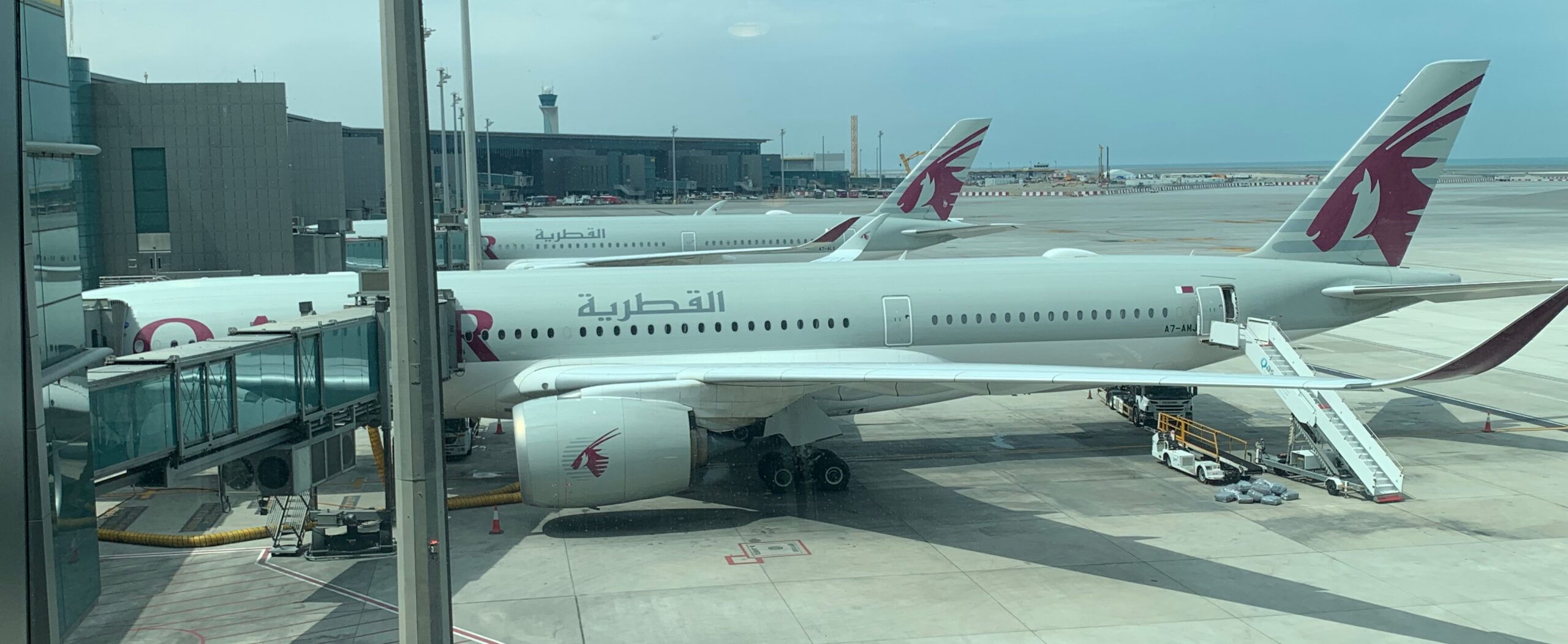
Doha (DOH), Qatar: Qatar Airways. Authorities reported intercepting projectiles aimed at or near Doha, including near Hamad International Airport. These interceptions prevented major damage to the airport. Airspace closures and security measures grounded most Qatar Airways flights for long periods, leaving many passengers stranded. Some flights are now resuming in phases, but schedules are limited and change often.
Kuwait City (KWI), Kuwait: Kuwait Airways and Jazeera Airways. The airport is closed to commercial flights after repeated drone attacks. To keep some service running, Jazeera Airways has moved cross-border flights to Qaisumah (Hafr al-Batin) Airport in Saudi Arabia, which is open. Passengers are being bused between Kuwait and Saudi Arabia.
Tel Aviv (TLV), Israel: El Al and Arkia. Missile and drone attacks have caused airspace closures, limits on outbound passengers, and damage to planes from falling debris. Ben Gurion is no longer a practical hub. Unless you have a specific reason and local advice, you should not plan to travel to or through Tel Aviv.
Tehran (THR and IKA), Iran: Iran Air. Iran’s main airports are basically closed to regular civilian flights because of conflict damage. Only a few flights are operating. Most international airlines have stopped service. Tehran and other Iranian airports are not good options for transit.
Airports where you should think carefully before travelling
Amman (AMM), Jordan: Royal Jordanian. The airport and airspace are open, but there have been many disruptions and cancellations, making it less reliable. Only use this route if you have a specific reason to go through Jordan.
Cairo International Airport (CAI), Egypt: EgyptAir. The airspace is open and Cairo is taking some diverted flights from closed Gulf hubs. However, there have been many cancellations and delays, and EgyptAir has stopped flying to the worst-affected Gulf and regional cities. Cairo is not a reliable backup, just a bit better than the Gulf.
Muscat (MCT), Oman: Oman Air. Muscat is now a key alternative hub because of closures and disruptions at other Gulf airports. Oman’s airspace is still open. Oman Air has added more flights to some places, but has also canceled several regional routes to the hardest-hit cities.
Riyadh (RUH), Jeddah (JED), and Dammam (DMM), Saudi Arabia: Saudia, flynas, flyadeal. These airports are open and still operating. If you travel through them, allow extra time, stay flexible, and have backup plans. Don’t expect things to run as usual.
Four Impacts Beyond the Gulf
1. Airlines are losing money and routes. Those with their most profitable international routes running to or from the Gulf cities are feeling acute pain. Ethiopian Airlines is reportedly losing tens of millions of dollars a week. Finnair, Lufthansa Group, other European carriers and Turkish have had to reroute long-haul flights around closed airspace, burning significantly more fuel. Qantas has had to add a stop on its Perth to Europe non-stops to cope.
2. Fuel costs and higher fares. Globally, fuel typically accounts for about a third of an airline’s operating costs. The big spike in jet fuel prices has erased profits almost overnight. Air India has declared a phased fuel surcharge on all tickets purchased from 10 March. Thai Airways is raising fares. Air France and KLM have both confirmed price increases on long-haul tickets issued from 11 March. Air New Zealand has cancelled several thousand flights to contain costs, as has SAS.
3. Jet fuel security problems. IATA is saying the crisis has exposed deep weaknesses in global jet fuel security. The collapse in shipping through the Strait of Hormuz has forced airlines to scramble for alternative suppliers at higher prices. Some airlines have enough fuel in storage to get them through to around mid-April. Countries like Vietnam and Thailand are warning carriers they may have to ration fuel at that point.
4. Winners at the edge of the crisis. Kenya Airways is picking up extra passengers on Europe-Asia flights that now connect via Nairobi rather than the Gulf. Japanese carriers which already rely heavily on polar or far-eastern routes between Europe and North Asia, are reporting fuller flights.
What This Means for Your Trip
This isn’t just a bad month. This is a very real, horrific, and frightening war. Even if a ceasefire were to arrive tomorrow, aviation experts say it would take weeks to restore normal schedules. It will take months to clear the backlog and reroute global networks. It will be years before we see any “normality”. If we see no ceasefire, then the world will change forever.
If you already have a booking
- Think about your own goals now. Ask yourself: if this flight were available tomorrow, would you still want to take the trip?
- Always check your government’s current advisory for your destination before you make decisions. That can affect both your insurance and your airline’s willingness to do so.
- Think about your own comfort with risk. If you’re nervous or on a tight budget, you might feel better taking a refund and planning again later. If you’re more flexible, you may want to wait it out and rebook for a new date.
- Check the airline’s current schedule page city by city and day by day, or use “Manage Booking” / “Flight Status” for your specific route. Don’t rely on third-party apps or old screenshots.
- Do not go to the airport without a confirmed, live booking.
- Decide whether to rebook or seek a refund/credit.
- Rebook to a new date if you really want or need to take the trip. Airlines are granting free changes with dates and routes.
- Get a refund or credit if the event you’re going to has been cancelled, a work trip is not necessary, you no longer feel safe going, or you’d rather get your money back and decide later than be stuck with a ticket that keeps shifting.
- If you can wait safely, let the airline cancel your flight: when they cancel or make big changes, you usually get a rebooking or full refund; if you cancel first and the flight still operates, you may lose some refund rights.
- Have a backup plan. Before you leave home, work out at least one other way to reach your destination — a different airline, a different hub, or a nearby airport plus ground transport.
- Be realistic about airline compensation. The airline’s main job is to get you to your destination eventually, not to pay for every disruption. War and airspace closures are usually treated as “extraordinary circumstances”, so compensation often doesn’t apply; focus on getting your fare back or a workable new flight, not on extra payouts.
- Remember that your insurance will almost certainly exclude war, civil unrest, and similar events, and if flights are cut for “operational reasons” or due to fuel costs, you may not get much compensation either.
- Keep all your documentation — emails, app messages, screenshots of delay notices and cancellation alerts. These can help with insurance claims, chargebacks or disputes later on.
- Keep an emergency buffer: have some cash in US dollars and euros, and make sure you have room on your debit or credit card. That way, you can buy a replacement ticket, extra hotel nights or ground transport if you need to. Don’t fly into a volatile situation with insufficient cash reserves.
- Don’t take your frustration out on staff. The check-in agents and call-centre teams aren’t to blame for any of this. They are often working with incomplete information, system crashes and long lines of upset travellers.
If you’re planning or about to book
- Decide how important your trip is? If it got pushed back by a month or took an extra 8 hours of travel time, would it be worth it?
- As stated, avoid routing through any Middle Eastern hub. Look at Southeast Asia: Singapore (SIN), Kuala Lumpur (KUL), Bangkok (BKK) or North Asia: Hong Kong (HKG), Seoul (ICN), Tokyo (NRT/HND) Alternative “bridge” hubs: Istanbul (IST) and some European gateways (e.g. London, Frankfurt) are absorbing re‑routed traffic. They are busier and more delay‑prone but still functioning.
- Choose flexibility over the lowest price. Get tickets that easily allow date or route changes without fees, or airlines that offer clear waivers and free-change periods. Paying a bit more will save you money and stress if your flight gets cancelled or changed.
- Separate tickets are especially vulnerable if one leg is delayed or rerouted.
- Give yourself extra time in your travel plans. Avoid tight connections and don’t schedule important events on the same day as a long-haul flight. Reroutes around closed airspace are making trips longer
This isn’t just a travel story; it’s a horrific, frightening war, especially for the people living through it every day. Our disrupted flights and ruined plans are minor beside that. The least we can do is stay informed, travel carefully if we have to move. Let us remember the human cost while we worry about tickets and connections.
This post is general information based on my own experience as a traveller and multiple sources. It is not legal, insurance or financial advice. Please check the current government travel advice, your airline and your own insurance policy for information specific to your situation.
Related Posts
- Flying via the Middle East right now. Practical tips, not panic, for travellers.
- “Where are you?” Ten Amazing and Two Terrible Travel Moments of 2025
- Surviving the Gunfire: How Tragedy Changed My Bangkok Life
- Stingray attack -a reminder of the need for Travel Insurance
- Why Flights Get Delayed, Who is Better and How to Stay One Step Ahead

Leave a Reply