

I just spent two hours in a café in Đà Nẵng, Vietnam, and ended up observing how differently cafés work here compared to other places. People were happily shouting to each other across the room, kids running and dancing and playing games or videos on their phones. One group took over a bunch of tables, dressed up in Japanese-style cosplay in the store, added makeup in full view, and then paraded around the café to show off.
In most local cafés in Vietnam, including Đà Nẵng, it’s common for things to be noisy and crowded, and for there to be a relaxed attitude toward kids, chairs, and personal space, especially when it’s busy. Vietnamese news and commentary mention that noisy cafés are just part of life, sometimes joking that “there’s no such thing as a quiet coffee” and that loud, busy cafés are “a normal day in Vietnam.” For many locals, cafés are places to gather and socialise, not quiet spots, so things like eavesdropping, staring, and moving around the space don’t feel as intrusive as they might in Northern Europe or Japan. Noise levels in busy Vietnamese cafés can reach 85–95 dB, comparable to standing beside heavy traffic, which forces normal conversation into near-shouting.
This single afternoon is what got me thinking about how differently cafés work around the world. In the last few months, I’ve worked from cafés in multiple cities across 30 countries, including Finland, France, Singapore, Malaysia, Indonesia, Colombia, Japan, Thailand, USA and Vietnam.
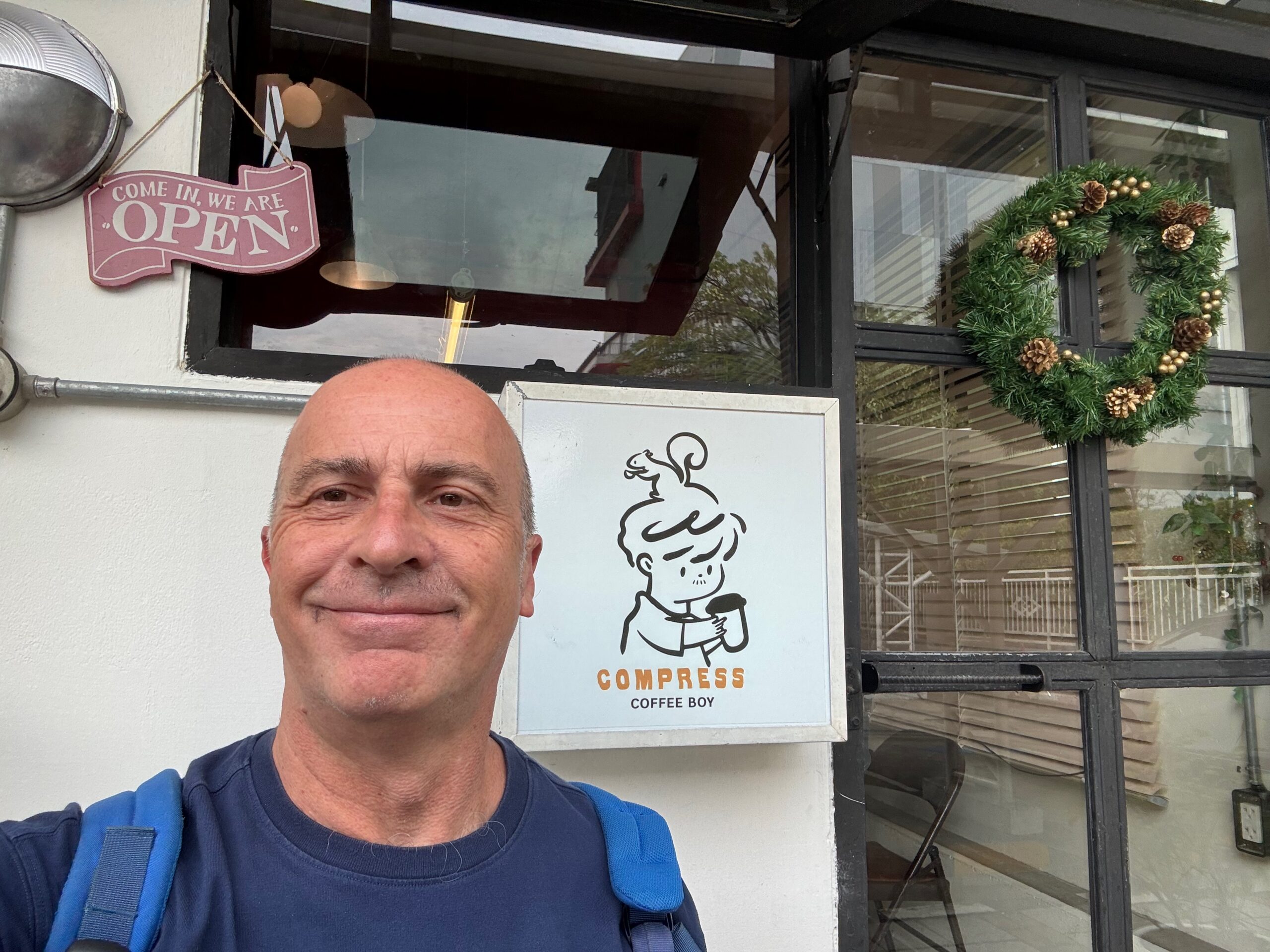
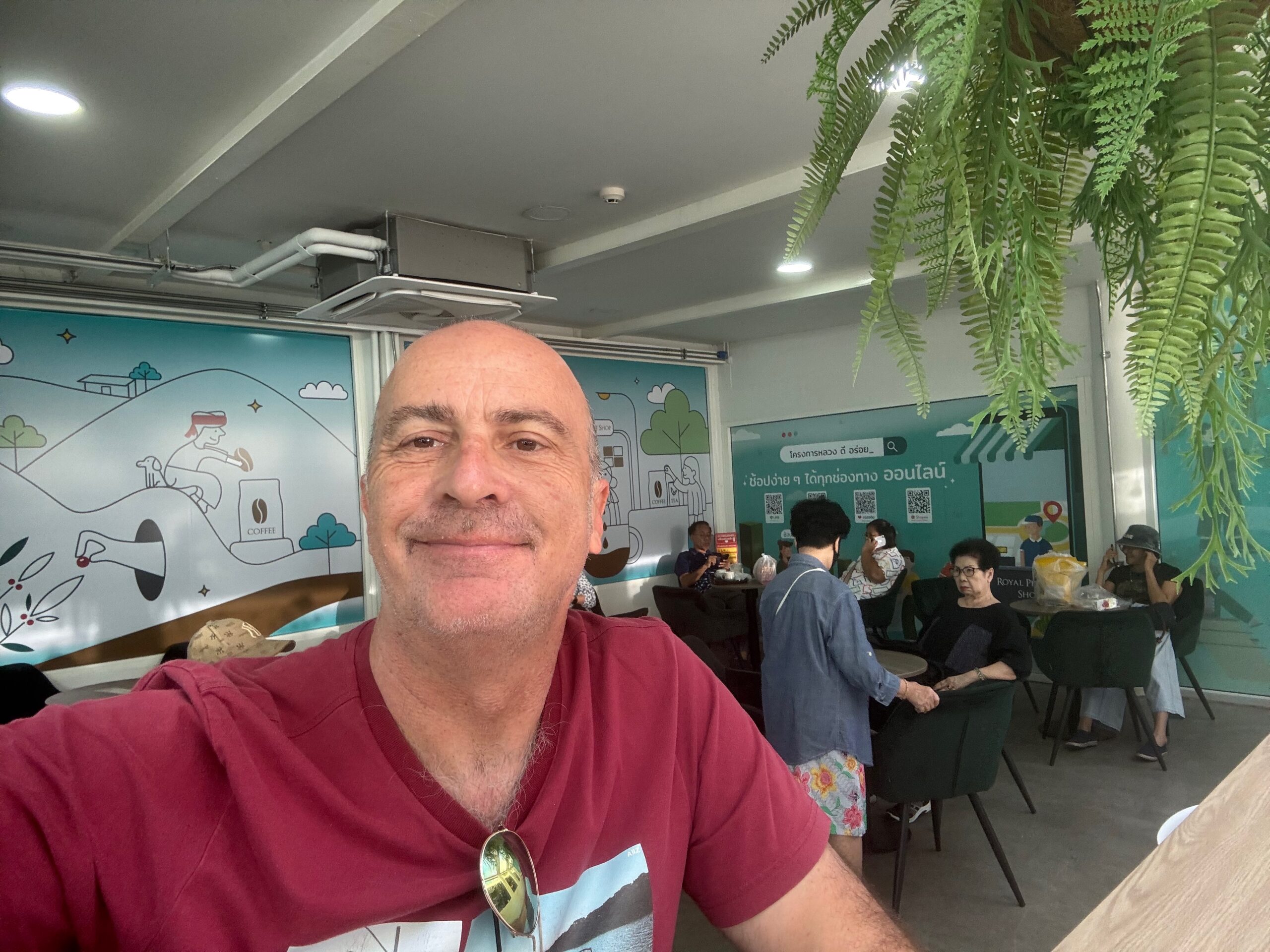


Cafés are useful for this because they sit at the intersection of work, leisure, family life, and everyday social rules, so small cultural differences become visible very quickly. A café is never just a place to buy coffee. In some countries, it functions almost like a shared living room, where conversation, children, movement, and social interaction are expected parts of the atmosphere. In others, it feels closer to a semi-private bubble, where people lower their voices, keep tighter physical boundaries, and avoid disturbing strangers.
Working from a café makes you notice this stuff way more than just visiting one. You’re not there for twenty minutes, you’re there for hours, so you end up watching the room. Are people looking over at each other? Are the chairs jammed together or spaced out? Are kids running loose, or are they sitting still? Is someone having their whole phone call on speaker like nobody else exists?
Personal Space and Public Life
Cafés quickly expose personal space norms: in some places, each table feels like a private bubble; in others, furniture and space are treated as shared, and people sit or stand close without it feeling intrusive.
Neither style is inherently better, but they create very different experiences for someone trying to work. A person coming from Finland or Japan may read close proximity as invasive, while someone used to highly social public environments may see the same behaviour as normal, practical, or friendly. People can get frustrated when they encounter tourists, visitors, or immigrants who don’t “respect” their culture. For some, sitting in a café for a video call and a speakerphone conversation is normal, while for others, having any kind of meeting or formal work session in the same space isn’t considered appropriate at all.
How does this actually break down country by country? Based on my experience, here’s roughly how it stacks up, from loudest to quietest.
Noisiest: Lebanon, Vietnam, China, India
Lebanon rivals Vietnam for the top spot on the list for cafe noisiness! Ambient noise in Beirut reportedly regularly reaches 80–90 decibels. Cairo has similar patterns. Traditional cafés in Cairo are culturally loud by design, packed with locals loudly chatting in a mix of Arabic dialects and other languages, sometimes with musicians performing. Vietnam, as noted, sits right alongside it, with noise levels in busy local cafés regularly ranging from 85 to 95 dB. China isn’t far behind either, with cafés reportedly averaging around 82 dBA. India has no café-specific noise data, but given its traffic and honking culture, often compared directly to Vietnam’s so it’s a reasonable bet it belongs somewhere in this tier!
Noisier: Indonesia, Malaysia, USA, Spain, Italy, Canada
Indonesia’s busy, socially open cafés often reach the high 70s dB. Malaysia sits in a similar 70-ish dB range: moderately loud but less chaotic than the top tier. US cafés often cluster in the high 60s to low- to mid-70s dB, with “too loud for conversation” usually flagged above 74 dB. Spaniards are widely described, even by themselves, as loud and expressive, and cafés there fill up loud enough that people end up raising their voices just to be heard, sometimes called the “café effect.
Italy sits right alongside Spain — Italians are commonly ranked among Europe’s loudest talkers, with everyday conversation running around 65–70 dB, and the country’s own residents describe daily life as genuinely loud, not just perceived that way, thanks to dense multi-use buildings and stone streets that bounce sound everywhere. I knew Canadian cafés are on the noisier end, but I was surprised to find crowdsourced data putting the average noise level in Canadian restaurants and cafés at close to 79 dB, higher than New York. Around 40% of Canadian restaurants are reportedly loud enough to risk hearing damage with repeated exposure.
Middle: Australia, Korea, France, Portugal, and UK
These sit somewhere between extremes. Social, but with more of a lid on it. Overall, expect noise to be in the mid- to high-60 dB. Australians push back on noise more than most, with cafés getting flagged as “too noisy” once they hit around 70 dB. Korea swings widely, from quiet, design-led cafés to loud student chains, but averages out in the mid-to-high 60s dB. France maintains a strong café-as-social-space culture, yet persistently loud venues are rare. Portugal is the calmer neighbour to Spain! The UK sits close by in this ranking!
Quieter: Thailand, Colombia, Singapore, Finland, Japan
Many cafés in this group appear to aim for a calmer vibe than anywhere else. The combination of lower voices, more controlled behaviour, and sometimes softer background audio makes these cafés feel much calmer. Colombia’s vibrant café culture falls in the low 60s. Surprisingly, I thought it would be much noisier. Thailand, Finland, and Singapore sit alongside that same noise level. Japanese cafés get even quieter, as Japanese noise etiquette strongly emphasises keeping sound down in shared spaces, so people restrain speech and avoid conspicuous sounds.




What This Says About Culture
Line all these countries up and a pattern appears: the loudest cafés tend to treat the space as an extension of public social life, while the quietest treat it as a shared but bounded bubble where restraint is expected. Neither end is better; a noisy Đà Nẵng café full of strangers pulling up chairs can be either a nightmare or a sign of genuinely shared public space, depending on what you need that day. The friction usually isn’t about the noise itself, but about whose default counts as ‘normal’ in that room. That afternoon in Đà Nẵng made it clear to me that ‘loud’ isn’t really about decibels at all, but about what people believe a café is meant to be.

Leave a Reply